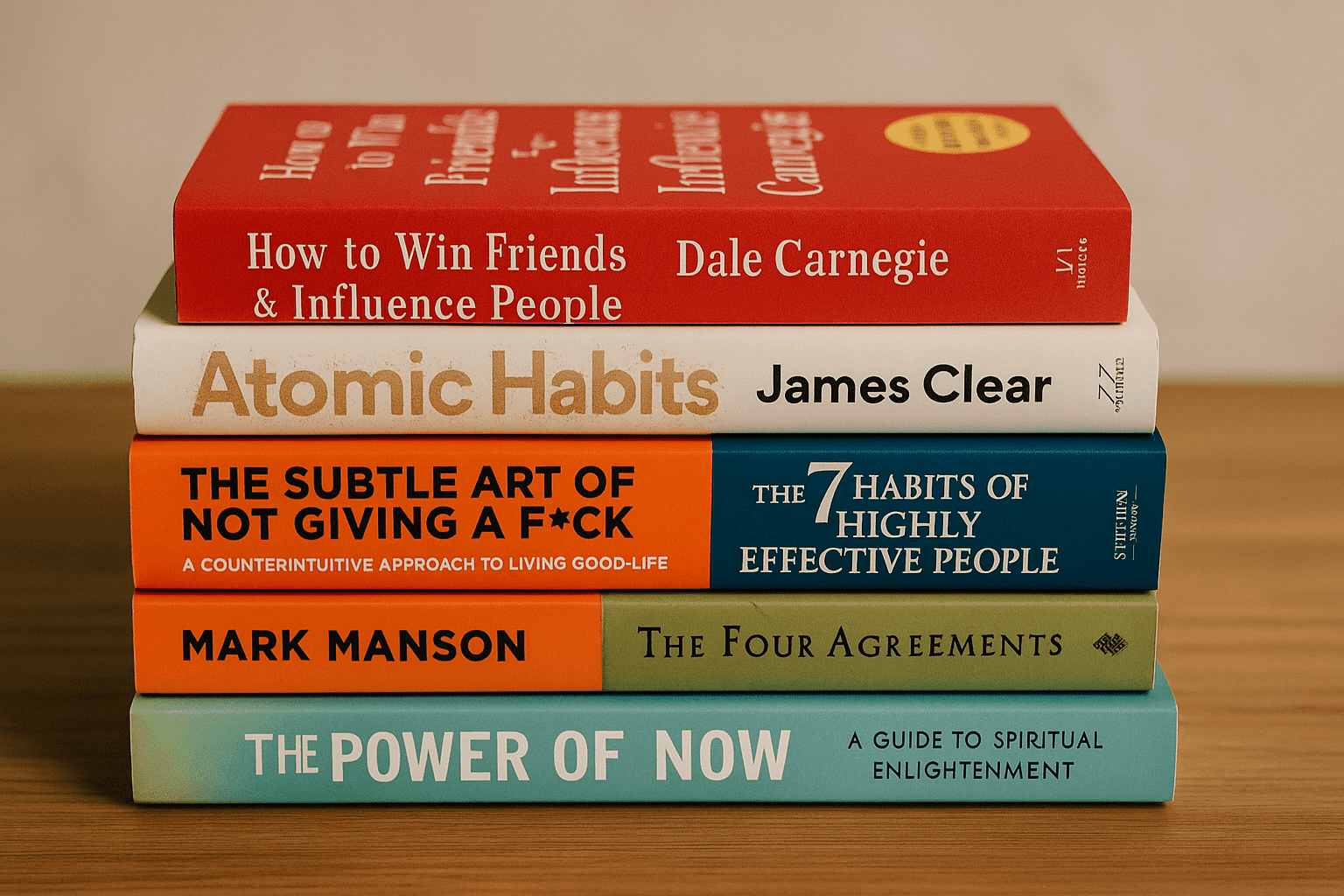
I have read a lot of self-help books.
Dozens across five years of consistent reading, which means I have also read a lot of bad ones — the repetitive ones, the ones that repackage the same three ideas across three hundred pages, the ones that feel like a motivational speech rather than anything that will actually change how you live.
The fifteen on this list are the ones that genuinely shifted something. Not all in the same way and not all in the ways I was expecting.
A few of them I was resistant to and came around on. A few I read at exactly the right moment and they landed with a precision that would not have been possible earlier.
All of them I would read again and have recommended to people I actually care about.
These are organized by what they are most useful for, but most of them overlap. Start wherever feels most relevant to where you are right now.
I. The Best Self-Help Books to Transform Your Mindset

1. The Daily Stoic by Ryan Holiday
This is the book I would give to someone who wanted to change how they move through the world but did not have large amounts of time to commit to reading. One page a day.
Each entry is short enough to read while the coffee brews and contains enough to think about for the rest of the morning.
Stoic philosophy is not about suppressing emotion or pretending difficulty does not exist. It is about the specific practice of distinguishing between what you can control and what you cannot, and directing your energy accordingly.
The anxiety that comes from trying to manage things outside your control is genuinely reducible. I know this because I have experienced the difference before and after having this framework clearly in my head.
The principles that have stayed most active for me: accept only what is actually true, match your wants and needs to what is within your power, and do not give what is outside your control the authority to determine your internal state.
Consistently applied, these are genuinely life-changing orientations.
2. The Mountain Is You by Brianna Wiest
This is the book I recommend most often to people who feel stuck in a pattern they cannot seem to break — the ones who ask themselves why they keep repeating the same mistakes when they know better.
Wiest’s answer is that the self-sabotage is not random and not a character flaw. It is a protective mechanism.
Your subconscious is doing something it learned to do in a context that made sense at the time, and it keeps doing it because no one has updated the system.
The mountain in the title is you — not your circumstances, not other people. You, operating from an outdated internal map.
The most useful thing the book does is make the subconscious legible.
Once you can see the pattern and understand what it was originally protecting you from, it loses some of its automatic grip.
That is when you can start making different choices.
Also Read: 21 Powerful Self-Help Books for Women

3. The Power of Now by Eckhart Tolle
I resisted this one for longer than I should have because the description sounded vague.
What I found when I actually read it was one of the most practical things I have ever read about the mind.
Tolle’s central argument is that most of the suffering we experience is not produced by our circumstances but by our relationship to time — specifically, the tendency to live either in replay of the past or in anticipation of the future, both of which are mental constructs rather than actual experience.
The present moment is the only thing that actually exists and it is the only place where you have any real power.
If you deal with anxiety or a mind that will not stop running, this book offers something genuinely useful.
Not a technique exactly but an orientation — the understanding that you are not your thoughts, you are the awareness behind them.
That gap, once you find it, changes the quality of your internal experience significantly.
4. 101 Essays That Will Change the Way You Think by Brianna Wiest
This is the book I return to most. Each essay is short enough to read in a sitting and dense enough to produce something to think about for days.
The essay that landed most for me during a period of trying to let go of a relationship was the one about how the people we once loved turn into strangers again.
It was one of those pieces of writing that articulated something I had been experiencing without having the language for it, and having the language for it made the experience more manageable.
The essays collectively do something useful: they make the invisible architecture of how you think visible.
When you can see a belief system from the outside, you have options about it that you do not have when you are operating from inside it without realizing it is there.
Also Read: 10 Best Personal Finance Books for Beginners to Build Wealth Fast
II. The Best Self-Help Books for Relationships

5. Conversations on Love by Natasha Lunn
This is a book about love in the broadest sense — romantic, familial, platonic, and the relationship you have with yourself.
Lunn interviews a wide range of people — therapists, writers, people who have loved and lost and loved again — and the collection of perspectives produces something more honest and more useful than any single expert’s take could.
The idea that stayed with me most is that expecting one person to meet all of your emotional needs is a setup for both people to fail.
A full life contains multiple sources of connection and meaning. The romantic relationship is one of them, not the whole of it.
That reframe changed how I understood what I was looking for and what I was expecting relationships to provide.
6. All About Love by bell hooks
The most transformative relationship book I have read, and I mean that specifically.
I came to it at a point in my self-love journey where I had become so self-protective that I had essentially closed off from love altogether — hyperindependent, resistant to needing anyone, suspicious of intimacy.
I thought this was strength. The book made clear it was not.
hooks defines love not as a feeling but as a practice — something you do rather than something you fall into.
She identifies seven components that constitute real love: care, affection, recognition, respect, commitment, trust, honest communication.
Without all seven, what you have is not love but something else wearing its name.
Reading that list and checking it against various relationships in my life was uncomfortable and clarifying in equal measure.

7. Attached by Dr. Amir Levine
This is the book that explained to me why I dated the way I dated.
Attachment theory describes the patterns developed in early relationships that determine how we show up in adult intimacy — whether we move toward closeness, pull away from it, or oscillate unpredictably between the two.
Reading this and recognizing my own pattern was genuinely revelatory. Not because it excused anything but because it made behavior that had felt mysterious and reactive suddenly comprehensible.
The most useful part of the book is not the categorization but the argument that attachment styles are not fixed.
You can move toward security through understanding your patterns, making more conscious choices about them, and choosing relationships that do not reinforce the insecure ones.
8. Why Men Love Bitches by Sherry Argov
The title is deliberately provocative and the content is more serious than it suggests.
This is a book about self-respect in relationships — specifically about the difference between seeking love from a place of genuine self-possession versus seeking it from a place of need.
The core argument is that when you stop chasing approval, stop over-giving, stop softening yourself to be more acceptable, and start behaving like someone who knows they are worth choosing — the dynamic in relationships changes completely.
Not as manipulation. As the natural result of actually valuing yourself.
The lesson that changed how I operated: you do not beg for what you deserve.
You do not ask to be treated well.
You simply remove yourself from situations where you are not, and let that communicate everything that needs to be said.
III. Self-Help Books to Make You More Successful
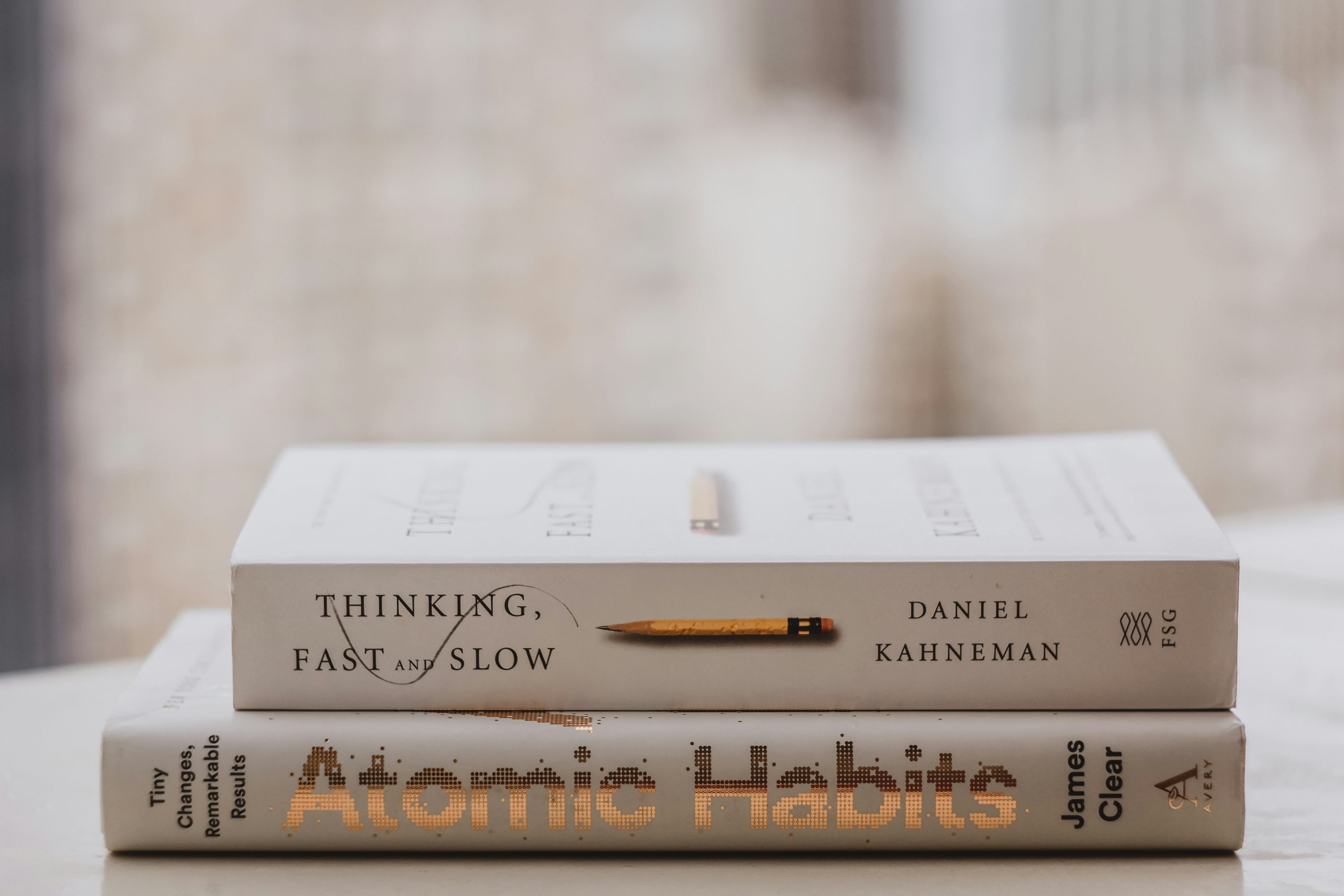
9. Atomic Habits by James Clear
This is the most practically useful book I have read on behavior change and it is useful because it addresses the actual mechanism rather than just the motivation.
The line that reorganized how I think about my daily choices: “You do not rise to the level of your goals.
You fall to the level of your systems.” I had goals for years. What I did not have was any reliable structure that made the behavior supporting those goals likely to happen consistently.
The book addresses exactly that gap.
The four laws of habit formation — make it obvious, make it attractive, make it easy, make it satisfying — are simple enough to apply immediately and robust enough to produce real change over time.
The framing I return to most often: every action is a vote for the person you are becoming. That turns small choices into identity choices rather than isolated decisions, which changes the weight of them.
10. How to Be a Bawse by Lilly Singh
This is the motivational book that earns its place on the list because it backs up the inspiration with specificity.
Singh writes from her own experience of building something significant from a difficult starting point, and the advice she gives is grounded in that rather than abstracted from it.
The emphasis on going further than required, building multiple pillars rather than relying on a single path, handling rejection without letting it reorganize your self-concept — these are practical positions rather than platitudes.
It reads like advice from a friend who has done the thing rather than a manual from someone observing from the outside.
For days when you need someone to tell you directly to keep going and here is specifically how — this is the book.

11. The Miracle Morning by Hal Elrod
I have been returning to this book for five years and it has had more direct impact on my daily life than almost anything else I have read.
I was someone who woke up late, felt sluggish until mid-morning, and consistently lost the first hours of the day to inertia.
The Miracle Morning addressed this not through discipline lectures but through a specific, practical morning structure I could actually implement.
The SAVERS routine — silence, affirmations, visualization, exercise, reading, scribing — is the shape my mornings have taken in varying forms ever since.
What Elrod understood that most productivity advice misses is that the morning is not just about getting things done early.
It is about who you are being before the day makes its demands. The version of yourself you bring to the rest of the day is substantially determined by how you began it.
12. The Chimp Paradox by Professor Steve Peters
This one changed how I understood my own mind at a fundamental level.
Peters describes the brain as having different systems operating simultaneously — one rational, one emotional — and the emotional one as significantly faster and more powerful in the short term.
Most of what we call self-sabotage, impulsive behavior, overreaction, and regrettable decisions is this emotional system operating before the rational one can engage.
The book does not tell you to suppress your emotions.
It teaches you to understand what they are trying to do — they are always trying to protect you, in their way — and to work with them rather than against them.
That shift from fighting your emotional responses to understanding their function changes how you manage them completely.
IV. Self-Help Books to Understand Yourself Better

13. The Untethered Soul by Michael A. Singer
The line that stopped me in this book: “You are not the voice in your mind. You are the one who hears it.”
I sat with that for a long time.
Because there is a difference between being inside a thought and observing it happening, and Singer’s book teaches you to find that difference in your own experience.
Once you can locate the observer — the awareness behind the thoughts rather than the thoughts themselves — the quality of your internal experience changes in ways that are difficult to describe but impossible to miss.
The book taught me to stop clinging.
To recognize that every passing emotion, fear, high, and low is a weather system moving through, not a permanent feature of the landscape.
Detachment in Singer’s sense is not coldness — it is the willingness to let things move through you rather than requiring you to hold onto them.

14. What Happened to You? by Dr. Bruce Perry and Oprah Winfrey
The reframe in the title is the whole book: instead of asking what is wrong with me, ask what happened to me.
The behaviors we judge most harshly in ourselves — the emotional reactivity, the patterns we cannot seem to break, the responses that seem disproportionate to the situation — are almost always survival responses.
The nervous system learned something from an experience it had and has been applying that learning consistently ever since, whether the original context still applies or not.
That is not weakness or immaturity. It is a nervous system doing its job.
Understanding this does not resolve the patterns automatically but it changes how you relate to them.
The compassion you can bring to your own history after reading this book is significantly different from the judgment that typically accompanies self-examination.
And the compassion is what makes change possible.
15. Maybe You Should Talk to Someone by Lori Gottlieb
This book felt like therapy in a way I did not expect.
Gottlieb is a therapist who goes to therapy, and she writes from both sides of that experience simultaneously.
The result is a book that is genuinely human about what healing looks like — nonlinear, slower than expected, full of resistance and insight arriving in no particular order.
I recognized myself in every patient she describes.
Not because the circumstances matched but because the interior experience of trying to make sense of your life while still living it resonated so specifically.
The book made therapy feel not like a treatment for something broken but like the simple act of having the space to be seen and understood without an agenda.
The most important thing it gave me: healing is not about being fixed. It is about being witnessed.
Most of us have needed that for longer than we have been willing to admit.
These fifteen books did not change my life dramatically in a single reading.
They changed it gradually, through repeated returns and changed circumstances that made different things land differently at different times.
Start with the one that feels most immediately relevant. The others will find their moment.