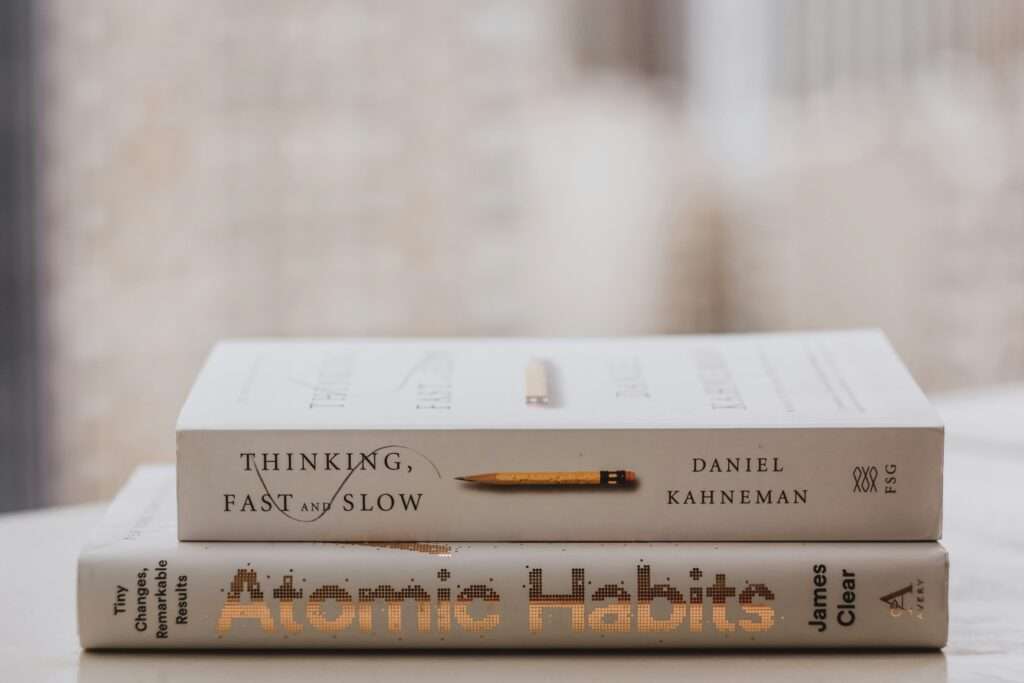
Over the last few years, I’ve read almost every book that exists on money and investing—from the timeless classics that cover the fundamentals, like Rich Dad Poor Dad, to the psychology-focused ones like Think and Grow Rich, and even the more technical investing books like One Up On Wall Street.
In this blog, I’m breaking down the key takeaways from these personal finance books—the ones that genuinely shifted how I think about, manage, and grow money.
Some of these lessons even contradicted what I learned in my day job in Investment Banking, which really surprised me.
And I’m curious to know—do you share the same perspective?
Let’s dive in.
1. Rich Dad Poor Dad by Robert Kiyosaki
Let’s start with the classic of classics.
This book is everywhere—and for good reason.
It lays down the foundational concepts around personal finance that most of us are never taught in school.
The book is based on the author’s two “dads”:
- One is his biological father—who suggests the traditional path: get a job, work hard, retire with a pension.
- The other is his best friend’s father—a self-made millionaire who encourages independent thinking and investing in assets that make your money work for you.
This is the book that first introduced me to the concept of assets vs. liabilities.
- Assets are things that put money in your pocket: investments like stocks, real estate, side hustles, or businesses.
- Liabilities are things that take money out of your pocket—like an expensive home that drains you in monthly payments.
It also changed how I viewed money.
The idea that every dollar is like an employee working for you made me much more intentional about spending.
Should I spend this now, or let it grow and work for me?
That mindset shift was huge.
2. Cashflow Quadrant by Robert Kiyosaki
This is the follow-up to Rich Dad Poor Dad, and it goes deeper into how people earn money.
Kiyosaki introduces the Cashflow Quadrant, which breaks down four different income paths:
- E – Employee (a 9–5 job)
- S – Self-employed (freelancer, dentist, small business)
- B – Business owner (owns systems that run without you)
- I – Investor (money works for you)
What hit me hard was the realization that most of us get stuck in the E or S quadrant, believing that job security = financial security.
But real freedom comes when you shift to the B and I quadrants.
It opens your eyes to possibilities—and once you see it, you can’t unsee it.
3. The 4-Hour Workweek by Tim Ferriss
I’ll be honest—when I first saw the title, I rolled my eyes.
A four-hour workweek? Really?
But once I actually read the book, I realized it’s not about working less—it’s about working smarter.
Tim Ferriss isn’t saying don’t work—he’s saying optimize. Eliminate, automate, delegate.
Most of us spend our days being busy, not productive.
And this book teaches you how to change that.
He introduces the DEAL framework:
- Definition – Redefine what wealth and freedom mean to you
- Elimination – Remove what’s unnecessary (hello, 80/20 rule)
- Automation – Use tools, systems, and people to do the work
- Liberation – Gain location and time freedom
This personal finance book pairs perfectly with Cashflow Quadrant—because once you understand that traditional work isn’t the only path, this gives you the how.
4. The Millionaire Fastlane by MJ DeMarco
This book offers a powerful perspective:
“There is no such thing as get rich easy, but there is such thing as get rich quick.”
It challenges the typical “slow lane” advice: work hard, save, invest, retire at 65.
DeMarco explains three financial paths:
- Sidewalk: Spend more than you earn → stuck in paycheck-to-paycheck cycles
- Slow Lane: Get a good job, invest a portion, retire someday
- Fast Lane: Build systems that create passive income (products, businesses, digital assets)
He talks about how real wealth is when you have control of your time.
It’s not about Lamborghinis and jets (unless you want that)—it’s about freedom, autonomy, and choice.
The book is brutally honest.
It says: yes, you can become wealthy young—but it will take years of unseen work, sacrifice, and delayed gratification.
So while others are “saving their way to wealth,” you’re building it—day by day, brick by brick.
This personal finance book is for those who want to build something bigger, faster—and who are willing to earn that acceleration.
5. Think and Grow Rich by Napoleon Hill
This book gets mixed reviews. Some love it.
Others think it’s all fluff.
Personally?
I think it’s a mindset masterpiece—but only if you’re ready to receive it.
If you’re expecting a practical, step-by-step financial strategy, this probably isn’t your book.
But if you’re open to exploring how your beliefs shape your results, it’s a game-changer.
One thing I appreciated is how he ties emotions, clarity, and repetition together—showing how your subconscious mind can either fuel your dreams or sabotage them.
That’s a powerful lesson.
But here’s the catch: mindset alone won’t make you wealthy.
That’s where a lot of people get stuck.
They read this, get fired up, and then… do nothing.
The magic happens when you pair the mindset with massive, intentional action.
That’s when the needle moves.
So if you’re willing to reflect, write, plan, visualize, and act—Think and Grow Rich can be truly transformative.
6. The Psychology of Money by Morgan Housel
Now this is one of the most approachable, relatable, and insightful finance books out there.
It doesn’t throw numbers at you.
It gets into your head—and shows you how your behavior around money matters more than how smart or educated you are.
Housel has this gift for storytelling.
He uses everyday examples, short chapters, and clean writing to explain big truths.
One of his key points:
“Doing well with money has little to do with how smart you are, and a lot to do with how you behave.”
He talks about things like:
- Why people with MBAs can still make dumb financial decisions
- How growing up poor vs. rich changes how you view risk
- Why being reasonable with money is often better than being rational
- The power of saving just to save, not for a specific goal
The part that really stuck with me? His take on luck vs. skill.
We often idolize billionaires and try to copy their every move—but their success usually involved huge doses of timing, randomness, or privilege that can’t be replicated.
Instead, we should focus on patterns, not people.
What consistently works over time?
What principles apply to anyone?
This book reminds you that wealth isn’t just about spreadsheets—it’s about patience, resilience, and knowing yourself.
7. The Intelligent Investor by Benjamin Graham
If you want to start investing, this is the book.
Warren Buffett read it at 19 and still calls it the best investing book ever written.
Now, I’ll be real with you: this book isn’t a casual beach read.
It’s dense.
But it’s also filled with timeless truths that’ll help you build a solid, long-term investing approach that’s grounded in logic rather than emotion.
Graham introduces the concept of “value investing”—buying stocks for less than what they’re worth and holding them long enough for the market to catch up.
He stresses the importance of creating a “margin of safety” with every investment, and most importantly, he teaches you how to stay calm when the market isn’t.
Because let’s face it—our emotions are often the worst investors.
This personal finance book helped me stop chasing trends and start building a rational framework for making investing decisions.
It taught me to think long-term, avoid hype, and never invest based on FOMO.
If you want to build wealth in the markets, this is the book that will give you the mental resilience to do it.
8. Girls That Invest by Simran Kaur
Now, The Intelligent Investor is great—but it can feel intimidating if you’re just starting out.
That’s where Girls That Invest comes in.
Written by Simran Kaur, this book is like having a smart, no-judgment best friend walk you through the world of investing, step by step.
It breaks down all the intimidating terms—stocks, ETFs, diversification, compound interest—and makes them digestible, even fun.
But more importantly, it addresses the emotional side of investing.
The hesitation.
The fear.
The inner voice that says, “Is this really for me?”
Sim empowers readers—especially women and people from underrepresented communities—to step into financial confidence.
She walks you through:
- Why investing is essential (and not just for the wealthy)
- How to figure out your risk profile
- How to build a personalized portfolio
- And how to tune out the noise and stick to a plan
This is the personal finance book I recommend to anyone who says, “I want to invest, but I don’t know where to start.”
It’s relatable, beginner-friendly, and incredibly encouraging.
A must-read if you want to start investing without overwhelm.
9. The Little Book of Common Sense Investing by John Bogle
John Bogle—the founder of Vanguard and the man behind the invention of the index fund—wrote this book with one clear message:
“Don’t try to beat the market. Just be the market.”
In other words, stop trying to pick the next Amazon or time the market’s ups and downs.
Instead, buy a diversified index fund that tracks the whole market, hold it forever, and let time do the work.
His reasoning is simple: most people (even the pros!) can’t consistently outperform the market.
But index funds—which are basically bundles of hundreds or thousands of stocks—do just that, with way lower fees and less stress.
The beauty of this strategy is in its simplicity.
You don’t need to be glued to stock charts or constantly researching individual companies.
You just invest consistently, automate the process, and trust the system.
That said, I do think Bogle’s approach can feel a bit conservative.
He recommends traditional stock-to-bond allocations based on age (like 60% stocks, 40% bonds), which may not resonate with everyone—especially younger investors with higher risk tolerance.
But if you’re someone who wants to build wealth passively and doesn’t want to make investing your side job, this book lays out one of the most effective long-term strategies ever invented.
10. One Up on Wall Street by Peter Lynch
This one is a gem, especially if you’ve ever thought, “I don’t have a finance degree—how can I possibly be better than Wall Street?”
Well, Peter Lynch says you absolutely can be.
The best investments are often right under your nose.
And I’ve seen this firsthand.
A few years ago, I got Invisalign.
I loved the product, was super impressed with the results, and looked into the company—turns out, it was publicly listed.
I bought stock in it, and to this day, that’s been my highest-return investment.
Why?
Because I experienced the product, believed in it, and did the research.
Lynch swears by the idea that everyday investors have an edge—simply because they experience trends, products, and businesses before analysts do.
His philosophy?
Invest in what you already understand.
He shares story after story of people who spotted winning stocks just by paying attention to what they—or their kids, or their friends—were already using and loving.
But it doesn’t stop there.
Lynch emphasizes the importance of researching the company behind the product:
- Is it profitable?
- Does it have a good balance sheet?
- Is it growing consistently?
- Does it have a competitive advantage?
One of my favorite takeaways from this book is how much curiosity and observation matter in investing.
You don’t need to chase hype.
Just look around you.
What are you already spending money on?
What brands do people love?
What companies are solving real problems?
Combine that intuition with research—and boom, you’ve got a strategy that feels natural and sustainable.
Sometimes, your own consumer experiences can lead you to your next great investment—if you back it with proper due diligence.
Final Thoughts: Invest in Yourself First
Here’s something most finance books don’t talk about enough—before investing in the stock market, invest in yourself.
Learn new skills.
Start a side hustle.
Understand how to make money before you try to grow money.
Because while the market takes time to pay you back, your skills can start paying you right now.
If you’re serious about changing your financial game, start with these books.
Read them, take notes, apply what resonates—and don’t just absorb the theory.
Act on it.