

I was the person who would rehearse what I was going to say before making a phone call.
Who would leave social situations replaying every sentence, looking for the thing I said wrong.
Who spent a significant portion of my teenage years and early twenties trying to be smaller and quieter and less visible because visibility felt dangerous.
I did not wake up one day and decide to be confident. It was slower and more embarrassing than that.
A series of small choices, most of which felt stupid at the time, that over years accumulated into something that now feels like a natural part of how I move through the world.
I can walk into a room full of strangers and feel okay. I can film content and put it online. I can disagree with someone without my heart rate tripling.
None of this was inevitable. All of it was built.
8 Ways to Be More Confident
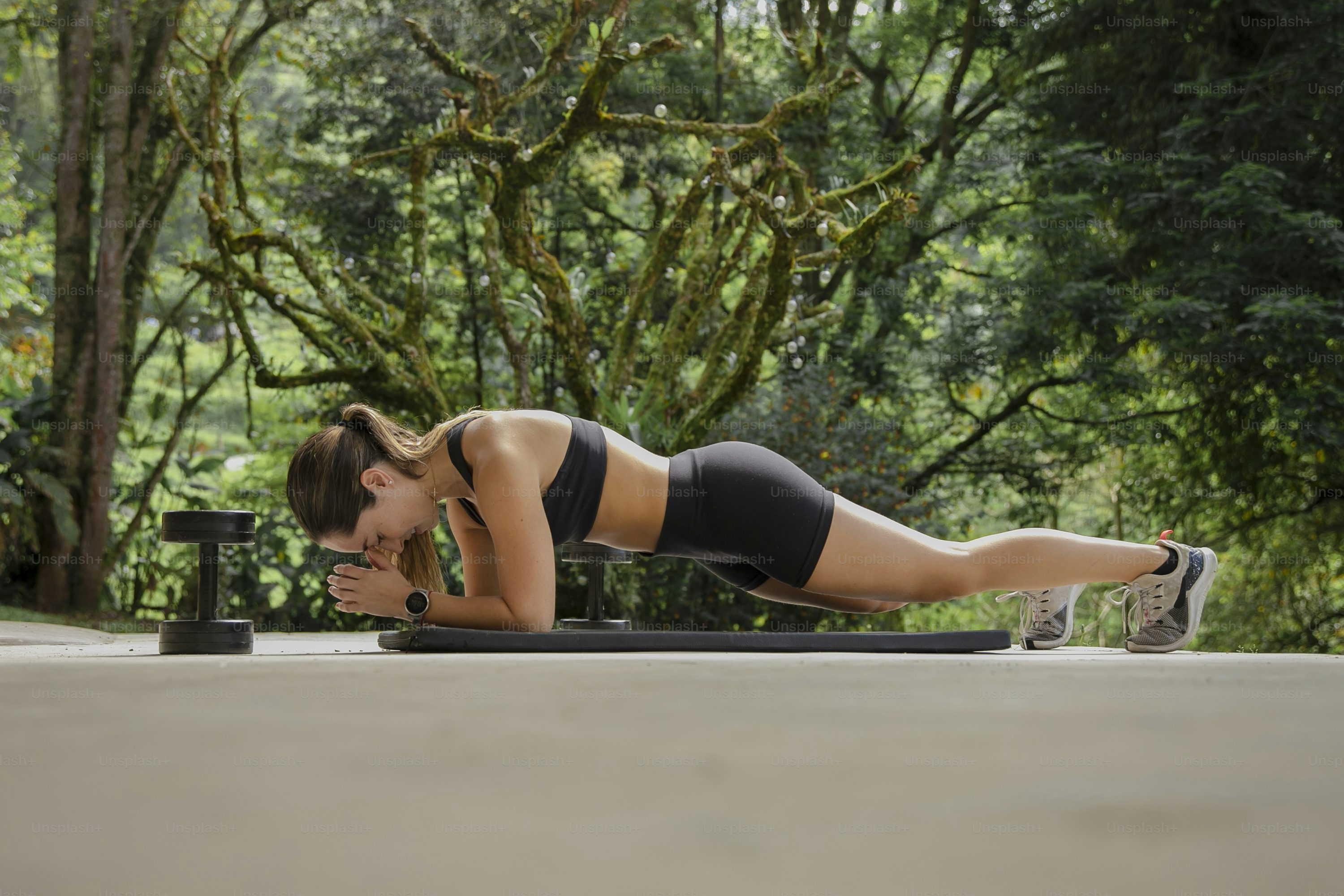
1. Keep the Promises You Make to Yourself
The most direct path to self-trust I know is this: say you will do something small and then do it.
The cycle that destroys confidence operates quietly. You tell yourself you will wake up earlier, you do not.
You say you will start the thing this week, you do not.
Each time you break the commitment, you are generating evidence that your word does not mean much — to yourself.
The evidence accumulates and produces the baseline feeling of not quite trusting yourself that most people experience as a vague undercurrent of insecurity.
The repair is the reverse of the damage.
You make a commitment so small you genuinely cannot fail — one page of a book, five minutes of movement, a glass of water before coffee — and you keep it.
Then you keep it again. Then the evidence starts accumulating in the other direction.
This is boring advice and it is the most foundational thing on this list.
Everything else becomes easier when you fundamentally trust yourself to follow through.

2. Choose Your Company Deliberately
The people you spend the most time with set the emotional baseline you operate from.
If your closest people are chronically anxious, self-doubting, and risk-averse, you will absorb some of that regardless of how aware of it you are.
Mirror neurons are not optional.
This does not mean abandoning anyone who is going through a difficult period or who struggles with confidence themselves.
It means paying attention to the aggregate effect of your social environment and making deliberate choices about it.
I noticed a shift in my own confidence when I started spending time with people who were building things and taking risks and treating their own potential as real rather than aspirational.
Not because they gave me advice about confidence but because being around people for whom a certain level of boldness was normal made it feel more normal to me.
The standard of what is possible becomes whatever is visible in your immediate environment.
Also Read: How to Make Friends Easily

3. Take Care of How You Present Yourself
There is a specific feeling that comes from getting dressed in something that fits well and suits you and going out into the day versus getting dressed in whatever was on the floor.
The difference in how you carry yourself is real and consistent.
I do not think appearance is the most important dimension of confidence.
I think it is the easiest to act on immediately and the one most people underinvest in relative to its return.
When you feel put together, you stand differently. You make more eye contact. You are less preoccupied with how you look because you already handled it.
If there is something about your appearance that consistently makes you feel self-conscious — something fixable, not something to be accepted — address it.
Not for other people. For the quality of your own daily experience.
4. Stop Being Desperate
Desperation is immediately visible to other people even when you are trying to hide it. The candidate who needs the job too much.
The person who needs the relationship to work too much.
The quality of the neediness transmits and tends to produce the opposite of the outcome you want.
The underlying shift is from coming to situations from scarcity to coming from sufficiency.
From I need this to work out to I would like this to work out and I will be genuinely fine either way.
This is not always easy to feel genuinely rather than just tell yourself, but it is buildable.
What helps: having enough going on in your life that no single person or opportunity feels like the hinge on which everything depends.
The version of you who has multiple good things happening and is excited about your own direction is not desperate for any one thing.
That is the version of you that tends to attract the things you want rather than push them away.
5. Forget About Embarrassment
Most of what we experience as embarrassing moments are visible to us in excruciating detail and largely invisible to everyone else.
The stumble, the wrong word, the moment where you blanked completely — you will remember this for weeks.
The people who witnessed it forgot it within about four minutes.
We dramatically overestimate how much attention other people are paying to our missteps. Everyone is primarily attending to their own experience.
The way to stop being controlled by the fear of embarrassment is to get embarrassed more often in low-stakes situations and notice that nothing actually happens.
Filming yourself in public.
Speaking up in a group when you are not sure your point is fully formed. Introducing yourself first.
Each time you survive the discomfort of potential embarrassment and see that the consequences were essentially nothing, the power of the fear decreases slightly.
Repeat enough times and it stops running your decisions.

6. Confidence is Silent, Not Loud
The people I have met who had the most genuine confidence were rarely the ones performing it loudest.
The loudest display of confidence is usually compensation for its absence.
Real confidence looks like being comfortable not filling every silence. Not needing to tell people about your achievements.
Not requiring the conversation to validate you.
Being in a room where you are not the center of attention and being completely fine with that.
It also looks like being able to tolerate someone’s disapproval without it destabilizing you. Not requiring agreement or admiration to feel settled in yourself.
That settledness is what reads as genuine confidence from the outside — not the performance of it.
Stop explaining yourself to people who did not ask for an explanation. Stop qualifying everything you say.
Let your actions be the argument rather than your words about your actions.
7. Embrace Your Authenticity
The exhaustion of presenting a curated version of yourself — slightly more agreeable, slightly less strange, with the edges filed off — is real and accumulates.
You can sustain it for a while in new environments or relationships.
Over time it is draining in a way that is hard to locate because it does not feel like a single thing, just a persistent low-level tiredness.
The shift toward authenticity does not happen all at once.
It is a series of small choices to be slightly more actually yourself in situations where you would usually modulate.
The opinion you actually hold rather than the safe version of it. The interest that makes you slightly embarrassed rather than the one that is socially legible.
The honest answer rather than the socially acceptable one.
What you tend to find is that the people worth spending time with respond better to the real version than to the performed one.
And the people who do not respond well are usually not people you particularly needed to impress anyway.
8. Master Confident Body Language
Before you say anything in a room, you have already communicated something with how you are holding your body.
Shoulders rounded forward, head slightly down, arms crossed — this communicates a person who is not particularly comfortable being where they are.
Shoulders back, head level, weight distributed, open posture — this communicates someone who belongs.
The connection between posture and internal state goes both directions. You can feel confident and it produces open posture.
You can also produce open posture deliberately and find that it nudges your internal state.
This is not magic — it is the embodied feedback loop that the body and mind are actually in with each other.
Make eye contact. Not aggressively, but consistently. Look at the person you are talking to rather than slightly beside them.
The willingness to be seen is itself a form of confidence.
Stop fidgeting with your hands or your hair or whatever the nervous habit is. The fidgeting is readable and it reads as uncertainty.
Stillness, even practiced stillness, communicates composure.
The version of me who rehearsed phone calls and replayed social situations and tried to be invisible is still accessible if I am very tired or in an unusually high-stakes situation.
The difference is that she is no longer the default.
She required active intervention to displace, and the intervention was mostly small repeated choices over several years.
That is available to everyone. It is just slower and less dramatic than most confidence content makes it look.


