
How I Manifested Everything I Wanted: The Power of a Vision Board
What if I told you that a few pictures, a simple foam board, and a dash of creativity could completely change your life?
Over the years, I’ve used my vision board to manifest everything from my dream job, dream salary, dream house, dream relationship, to my dream body—and so much more!
Not only has it helped me achieve my dreams, but it’s also kept me on track. So, let’s learn how to build a vision board that actually works.
What Is a Vision Board?
A vision board is essentially a visual representation of the life you dream about. It’s like a mood board, but with a very specific purpose.
You add pictures, affirmations, and anything that represents your dreams and goals. It helps clarify exactly what you want in your life and serves as a constant reminder to take steps toward those goals.
Looking at your vision board daily trains your subconscious to seek out opportunities that align with your dreams, slowly closing the gap between where you are now and where you want to be.
Now, here’s a fun fact: we humans have around 12,000 to 60,000 thoughts per day.
Yes, you read that right.
But here’s the catch—studies show that about 80% of those thoughts are negative, and a whopping 95% are repetitive.
This means that we tend to think about the same things, over and over again, which can lock us into old thought patterns.
That’s where the power of a vision board comes in. Every time I create one, it feels like unlocking a new level in my life.
It helps me realise what’s possible and what I can achieve, and it all starts with seeing it.
Okay, this is getting a little formal—let me share my personal experience.
My Personal Experience with Vision Boards
The very first time I made a vision board was at the start of 2020. I had been struggling with my weight for a long time.
Despite trying to lose it, I wasn’t seeing any results. So, I decided to make a vision board focusing on my health.
I added pictures of people with bodies I admired and visuals of me looking fit and healthy.
I put this vision board right by my bed, so the first thing I’d see every morning was the life I wanted.
And here’s the magical part—every time I looked at that board, I imagined myself losing weight, feeling good, and receiving compliments from people around me.
I would feel the confidence surge through me. This wasn’t just wishful thinking; I started believing that it was happening.
Six months later, I had lost 20 kg and had gone from 70 kg to 50 kg.
This was proof to me that vision boards weren’t just a fun DIY project; they were a powerful tool for manifestation.
In 2021, I made my second vision board.
This time, it was about my dream college. I added a picture of me standing at the entrance gate of my dream university.
I looked at it often while working and studying.
Just two months later, I received my admission letter. I even got to take a picture standing exactly where I had imagined on my vision board.

The Science Behind It
I believe deeply in the power of thoughts and the subconscious mind.
What we focus on grows, and when you align your thoughts with your feelings and emotions, the universe conspires to help you.
This isn’t some mystical mumbo jumbo. It’s all about being aligned—when your emotions, thoughts, and actions are in sync with what you want, that’s when the magic happens.
To get there, though, you need to put in the effort and trust the process.
A vision board can help set the intention, but without action and belief, you’re not going to see results.
One thing I’ve learned is that a vision board can be a great starting point, but it’s not the be-all and end-all.
It helps you visualise where you want to go, but without consistent, intentional effort, you won’t achieve your goals.
How to Make a Vision Board That Actually Works
Now that you know how powerful a vision board can be, let’s dive into how to make one that actually works. Creating a vision board that helps you manifest your dreams requires three key ingredients: intention, specific goals, and emotion.
Step 1: Set Your Intention
Before you start working on your vision board, ask yourself: What is my intention for the coming year? What do I want to achieve, and how do I want to feel?
Your intention is like a mission statement for your life.
For example, my personal intention for this year is to break barriers while staying authentic.
If you’re unsure about your intention, here’s a fun exercise: close your eyes and imagine what a day in your dream life would look like.
What books are you reading? What are your daily habits? What’s your morning routine like? How do you feel when you look at yourself in the mirror?
When you start thinking about these things, you’ll get a better idea of what you want your life to look like.
You can then pick out categories like health, career, relationships, and money. This process will help you clarify exactly what you want and how to start moving toward it.
Step 2: Get Specific with Your Goals
Once you have your intention set, it’s time to get specific with your goals. And I can’t emphasise this enough—specificity is key!
If you’ve ever met someone who has had success with a vision board, they’ll tell you that the more specific you are, the more likely you are to see your dreams come true.
Want a house? Get specific about the exact location, the size, the colour, the number of rooms, and even the type of furniture you want.
Want a job? Write down the exact job title, the company you want to work for, and even the salary you’re aiming for.
Trust me on this—once you start seeing these specific goals coming true, it builds your belief in the process.
Now, don’t be discouraged if your dreams don’t come true in the first 6 months or 1 year. Sometimes, you just need a little more time to get prepared for what’s coming.
Let me share an example from my own experience: In 2019, I added losing weight to my vision board, but I didn’t put in the effort to eat healthy or exercise. Guess what?
I didn’t lose any weight. This taught me an important lesson: a vision board isn’t a magic tool that works on its own.
It’s a tool that helps you visualise where you want to be, but without consistent effort, it won’t work.

Step 3: Visualise and Feel It
This step is crucial, and not many people talk about it.
Before you start making your vision board, you need to close your eyes and visualise every single goal you’ve written down.
Then, imagine how you would feel after achieving those goals. Would you feel proud? Happy? Grateful? Excited?
Feel those emotions deeply.
Once you’ve visualised the feelings, go on Pinterest or search for images that represent those emotions and goals.
When you find something that resonates with you, make sure to use it on your vision board. The more aligned you are with the visuals, the better it will work for you.
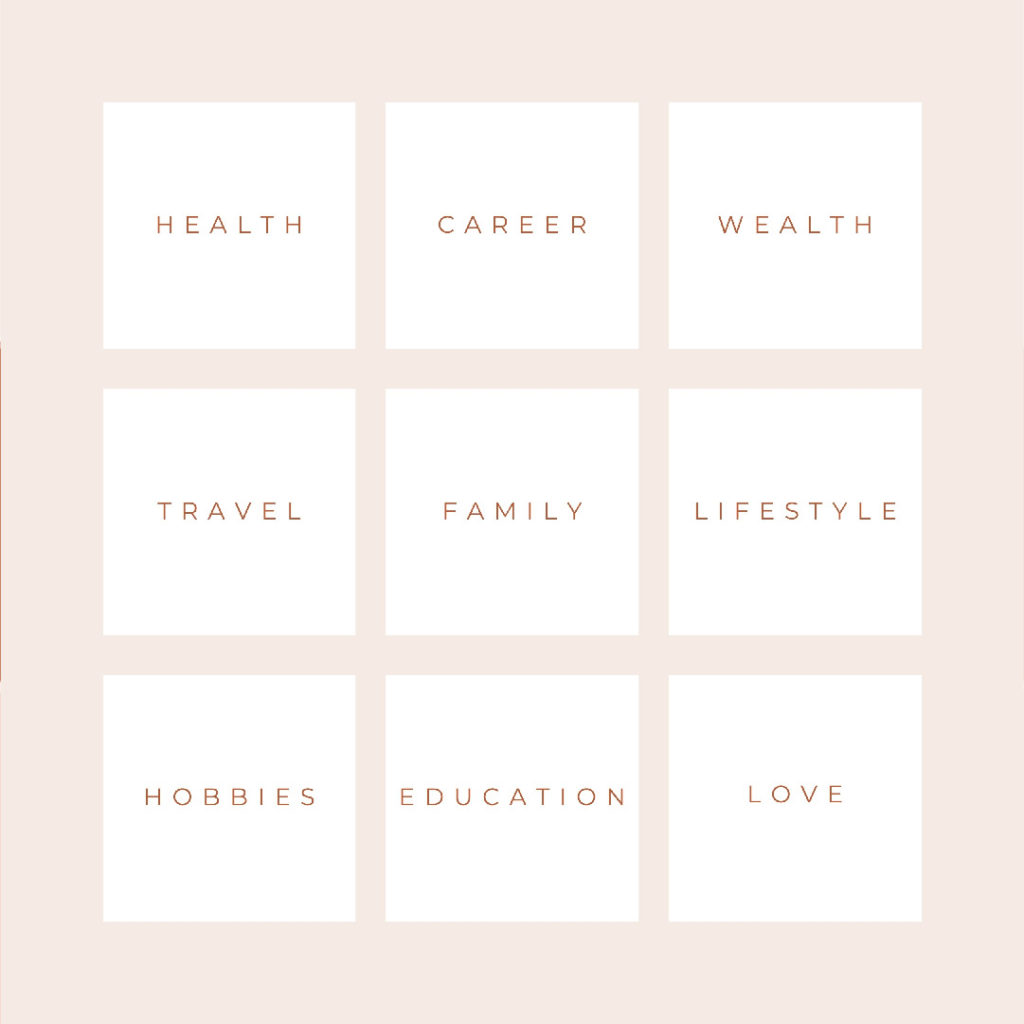
The Categories I Use for My Vision Board
When I make a vision board, I divide it into 5 categories. This helps me keep everything organised and makes sure I’m covering all aspects of my life:
- Career & Big Dreams – This is where I add my ultimate career goals, the vision I have for my professional life. What do I want to be doing? What are my big dreams?
- Social Media – Here, I get specific about my social media goals. How many followers do I want? What kind of content do I want to create? How do I want to connect with others?
- Money – This category is about financial goals—how much money do I want to make, and what kinds of things do I want to do to earn that money? This includes things like side businesses, investments, or passive income.
- Leisure – What do I want to do to relax and have fun? This includes travel destinations, hobbies, or self-care activities like massages and staycations.
- Wellness – How do I want to take care of myself? This includes goals for physical health (like fitness or skin care), emotional health, and how I want to feel from within.

Affirmations: The Secret Ingredient
Along with your vision board, equally powerful and just as important are the affirmations you use.
Words have energy, and the right words can shift your mindset and help you manifest your goals.
For example, recently I’ve been dealing with self-criticism, so I wrote an affirmation: “I am confident in my abilities, and I trust the process.” I keep this on my vision board as a reminder to stay positive and believe in myself.
Do’s and Don’ts for an Effective Vision Board
Creating a vision board is a personal, creative process. However, there are some important dos and don’ts to ensure that your vision board works for you and your goals. Let’s dive in.
Do’s for a Vision Board
- Do Make It Visual and Emotional A vision board is all about visualising your dreams. Use images that resonate deeply with your emotions. Each image should trigger a positive emotional response in you, whether it’s excitement, gratitude, or joy. This emotional connection is key to making your vision board work.
- Do Set Clear, Specific Goals The more specific you are, the better. Whether it’s a certain income level, weight loss goal, or career achievement, make sure each goal is detailed. For example, “I want to travel to Bali in 2025” is more actionable than “I want to travel more.”
- Do Break It Down into Categories Divide your vision board into categories that reflect different areas of your life: health, relationships, career, money, and wellness. This will help you focus on each aspect of your life while maintaining balance.
- Do Keep It Visible Once your vision board is ready, place it somewhere you’ll see it every day. Whether it’s next to your bed, on your desk, or on your fridge, make sure it’s in a location that will keep your goals front and center in your mind.
- Do Use Affirmations Along with images, use powerful affirmations that support your goals. For example, if your goal is to get healthier, an affirmation might be, “I am healthy, strong, and vibrant.” Repeat these affirmations daily to reinforce your belief in achieving your dreams.
- Do Update Your Board Regularly Your dreams evolve, and so should your vision board. As you achieve your goals, replace the images with new goals and aspirations. This will keep your vision board fresh and aligned with your growing desires.

Don’ts for a Vision Board
- Don’t Be Vague Don’t leave things open-ended. Saying “I want to be successful” is too vague. Define exactly what success looks like for you. Whether it’s a promotion, buying a home, or starting a business, specify the steps and timeline.
- Don’t Overcrowd the Board A vision board should be clear and focused. Don’t overcrowd it with too many goals or images. Limit yourself to 5-10 major goals per year to keep your focus sharp.
- Don’t Set Unrealistic Goals While it’s great to dream big, make sure your goals are achievable. If you set goals that are too far out of reach, you may become discouraged. Start with small, attainable goals and build your way up to bigger dreams.
- Don’t Ignore the Power of Action A vision board isn’t magic—it’s a tool to help you visualise your goals, but without action, those goals won’t manifest. Make sure you’re taking consistent steps toward your dreams every day.
- Don’t Get Discouraged If Things Don’t Happen Immediately Manifestation takes time. Just because you don’t see immediate results doesn’t mean your dreams aren’t coming true. Trust the process, be patient, and continue working toward your goals.
Conclusion: Let’s Manifest Together
Now that you have the tools and techniques to create a vision board that works, it’s time to get started!
The beauty of a vision board is that it’s not just about manifesting one big dream—it’s about creating a life you truly desire, step by step.
And I’m confident that with the right mindset, your vision board will become a powerful tool in your journey.
Let’s check back in a year and see how much of your vision has come true. I’m creating a new vision board this year, and trust me, I’ve put some crazy things on it.
I’m excited to manifest with you.
Let’s get started and make our dreams a reality!